

Moving to Asia After 60: What You Cannot Read on Food Labels (and the Fix)
Moving to Asia After 60: What You Cannot Read on Food Labels (and the Fix)
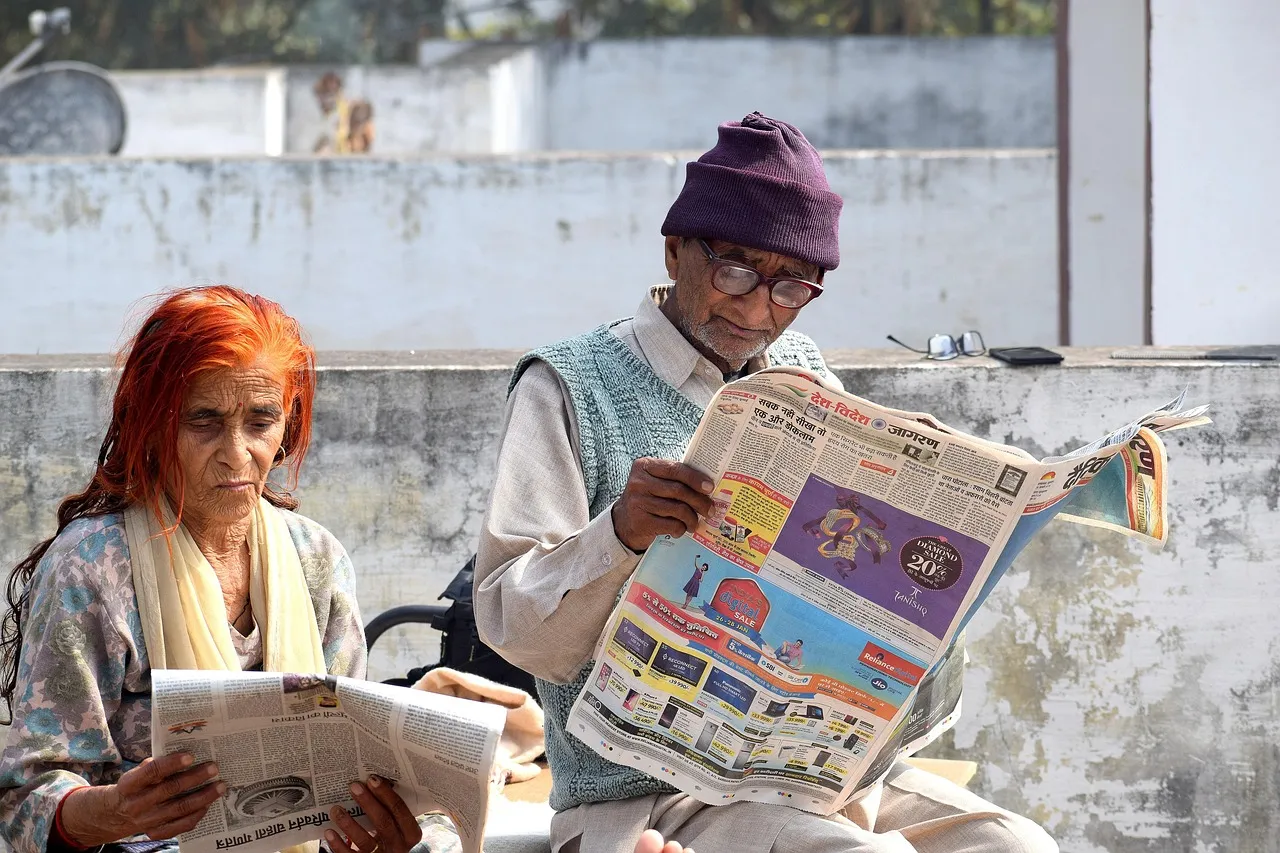
You are in a supermarket in Chiang Mai, Penang or Fukuoka, holding a packet you have bought twenty times at home. The front is friendly. The back is a column of small print in a script you do not read, under lighting that bounces off the plastic.
For most shoppers that is an annoyance. If your diet is restricted, for faith, ethics or a medical condition, it decides whether the packet goes in the basket. Two problems compound: the words are unfamiliar and the type is tiny.
Key Takeaways
- What changes on moving to Asia is the label, not the food: local script, small print, English on imported brands only.
- Japan, Vietnam and Thailand all require key label information in the local language, so the pack is not written for you by design.
- The ingredients that catch older shoppers most are fish sauce, shrimp paste, pork and lard, gelatin, flavour enhancers, sugar and salt.
- The fixes are practical: zoom the camera, scan a barcode when there is one, and keep a photographed list of products that passed.
- For a medical diet a scanner is a second pair of eyes, not an authority. Your doctor’s advice governs.
TL;DR: the label problem in Asia is two problems at once, an unfamiliar script and small print, so build a routine that does not depend on your eyes at the shelf: photograph the ingredient list, check it at home, and keep a short list of products you have already cleared.
What actually changes in the supermarket
Three things, and only one of them is about language.
- The script. In Thailand, Japan and Korea the script is unfamiliar. In Vietnam and Malaysia the letters are familiar and the words are not.
- The rules. Local law decides the language. Japan’s Consumer Affairs Agency states that food labelling must be in Japanese when selling in Japan (Consumer Affairs Agency, Government of Japan, retrieved 2026-09-24). Vietnam’s labelling decree requires mandatory content in Vietnamese, with any other language smaller than the Vietnamese text (Government News, Socialist Republic of Vietnam, retrieved 2026-09-24). Thailand requires nutrition labelling in Thai, with other languages optional (Thai FDA Food Division, retrieved 2026-09-24). An English translation is a courtesy, not a right.
- The premium. Imported products with English labels cost more than the local equivalent. That is a fair trade for the twenty things you buy every week and a poor one for everything else.
Malaysia is different: the script is Latin, so you can read every letter, but daging babi is pork, lemak babi is lard and sos ikan is fish sauce. Our Malaysia common ingredients page lists those words, and the same approach works for Thailand’s ingredient words.
Small print is a design problem, not a character flaw
Vietnam’s labelling decree sets the letter height for compulsory content on prepacked food at no less than 1.2 mm (Government News, retrieved 2026-09-24). That is a legal floor, and plenty of packs sit close to it. Under supermarket lighting, 1.2 mm of unfamiliar characters is not something to feel bad about failing to read.
So stop reading at the shelf. Use the phone camera as a magnifier: zoom until the ingredient block fills the screen. If the pack has a barcode, scan that instead and let the product data do the work. If it has none, which is normal for market sauces and repacked goods, photograph the list and read it at home. Do the first pass while you still have wifi, so the language data and your history are already on the phone, which is the point of scanning food offline while travelling.
The ingredients that catch people on restricted diets
- Fish sauce and shrimp paste. Anchovy and crustacean, in most Thai and Vietnamese savoury packaged food, including curry pastes and noodle sachets.
- Pork and lard. Also in stocks, dumplings and some biscuit shortenings, which matters for halal, kosher, no-pork and no-beef shoppers.
- Gelatin. From pork or beef collagen, in jellies, marshmallows, capsules and some yoghurts.
- Flavour enhancers. Monosodium glutamate and the related nucleotides. WHO notes that sodium is contained in sodium glutamate, used as a food ingredient and additive in many parts of the world (WHO, 11 May 2026, retrieved 2026-09-24).
- Sugar and salt. WHO recommends adults stay under 2,000 mg of sodium a day, under 5 g of salt, against a global average of 4,278 mg a day in 2021, and names condiments such as soy and fish sauce as a major source (WHO, retrieved 2026-09-24).
Potassium is a different problem: it is not something you can settle from the front of a pack, and no scanner changes that. If your doctor has given you a potassium or phosphorus target, that target comes from your doctor.
Fix 1: make the phone do the reading
Camera zoom for the ingredient block, barcode scan when there is a barcode, a photo when there is not. A magnifier app also helps with shelf-edge labels and price cards, which are often worse.
Fix 2: keep a photographed safe list
Every time a product passes your check, photograph the front of the pack into one phone album. After a month you have a personal catalogue of twenty products, and most weekly shops need no reading at all. It also briefs anyone who shops for you.
Fix 3: ask a person, and ask the right one
Pharmacy staff are the right people for a medical diet question. For the words, ask a neighbour or a younger shop assistant: not “is this safe?” but “what is this called, and what is in it?” The vocabulary you collect keeps paying. In your first weeks, the sequence in your first grocery trip abroad is a good starting routine.
Fix 4: buy food that carries no label
The produce market, the rice sack, the egg tray and the tofu stall need no translation. Neither does the fresh counter, where you can point at the cut you want. The more of your basket that arrives without packaging, the fewer labels you read, and the cheaper the week gets.
A safety note for medical diets
An ingredient scanner is a second pair of eyes. It reads the list you photograph or the product it looks up, and flags what it finds against your diet. It does not know your prescription, your targets, the portion you eat, or what happened in the factory. For a medical diet your doctor’s advice governs, and for a severe allergy treat any app as an assistant, not a guarantee. When a flag matters clinically, confirm with the brand or the pharmacist.
Why Asia keeps appearing on these lists
Asia’s showing in retiree rankings is why this audience keeps growing. Thailand was named Asia’s best place to retire for 2026, ninth globally in the 2026 Global Retirement Index (Time Out Bangkok, retrieved 2026-09-24), and Malaysia was ranked the safest retirement destination in Asia and third safest in the world, with Vietnam ninth globally (Tempo English, retrieved 2026-09-24). A ranking is a signal about where people are going, not a plan. This guide stays on groceries.
The bottom line
The label will not get easier to read and the script will not become familiar on its own. The routine will: photograph the list, check it in better light, keep what passed, and ask a person when the answer matters. If the words are what you want to solve first, the short-list method works in every language, as we set out in reading food labels in a foreign language.
Check before you eat. The Verify Veg app scans a barcode or reads an ingredient list from a photo and flags ingredients against your diet (vegan, vegetarian, halal, kosher, Jain and more). Download on the App Store - Android is coming soon.
Written by Samir Narain, founder of Verify Veg. Verify Veg helps people check packaged food against their diet by scanning barcodes and reading ingredient lists from photos.
Note: Verify Veg provides ingredient-based compatibility checks, not certification. Recipes and preparations vary by restaurant, region and cook, so always confirm with the restaurant, brand or vendor.