

Hidden Animal Ingredients in Thai Food (Fish Sauce, Shrimp Paste)
Hidden Animal Ingredients in Thai Food (Fish Sauce, Shrimp Paste)
Thai food is a challenge for vegetarians for a specific reason: the animal products are not meat on a plate, they are dissolved into the sauce. A vegetable green curry, a papaya salad, a bowl of noodle soup. None look like they contain animals, but all of them usually do.
Key Takeaways
- Fish sauce (nam pla) is fermented anchovies, and it is in almost everything savory.
- Shrimp paste (kapi) is the hidden ingredient in green, red and other Thai curry pastes.
- Oyster sauce and dried shrimp are also common, even in “vegetable” dishes.
- The Thai word “jay” (เจ) signals vegan/vegetarian food that excludes fish sauce and shrimp paste.
TL;DR: Thai food hides animal products in fish sauce, shrimp paste and oyster sauce. Even vegetable dishes are usually seasoned with them, so “vegetarian” is not the same as vegan or meat-free unless you ask.
Fish sauce: the number one hidden ingredient
Fish sauce, called nam pla in Thai, is the backbone of Thai seasoning. It is made by fermenting fish, usually anchovies, in salt until the liquid is dark, savory and deeply umami. A spoonful goes into nearly every savory dish, from stir-fries to soups to dipping sauces. HappyCow, the leading vegetarian restaurant guide, lists fish sauce as the first hidden animal ingredient to watch in Southeast Asian food (HappyCow, retrieved 2026-08-25).
This is the trap: a vegetable stir-fry is still cooked with fish sauce, so it is neither vegetarian nor vegan even with no visible meat.
Shrimp paste: the ingredient in the curry paste
Thai curry pastes get their savory depth from kapi, a fermented shrimp paste. Green curry, red curry, panang and massaman all traditionally contain it, which is why a vegetable curry is not automatically vegetarian. The shrimp paste is invisible because it is ground into the paste before cooking.
Other things to watch
- Oyster sauce: used in stir-fries and on vegetables, especially Chinese-influenced dishes.
- Dried shrimp: sprinkled into papaya salad (som tam) and some soups.
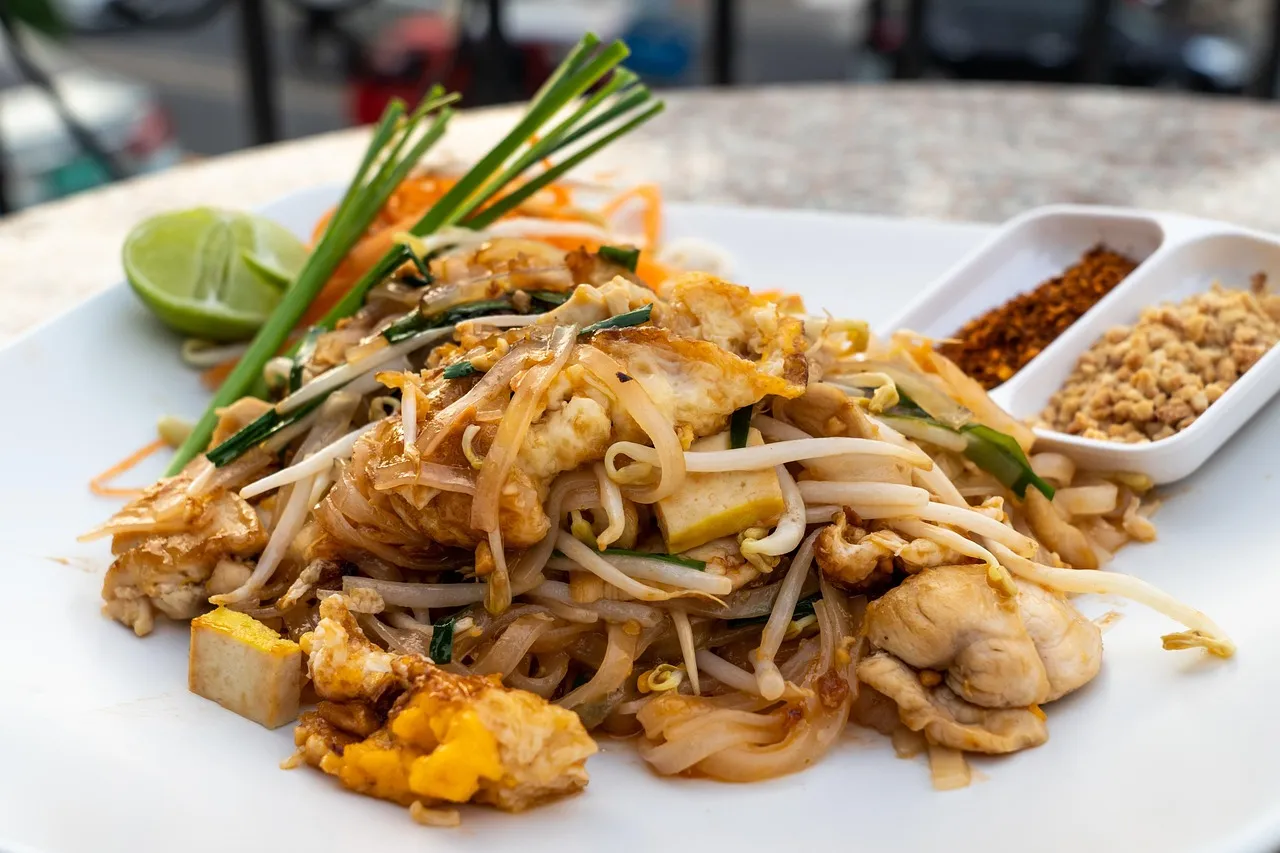
- Egg: in pad thai, fried rice and many stir-fries.
- Pork or chicken stock: in some soups and noodle broths.
Papaya salad is the classic gotcha: it looks like a fresh vegetable salad, but the traditional dressing contains fish sauce and dried shrimp.
The “jay” shortcut
Thailand has a built-in solution. “Jay” (เจ) food is the Thai Buddhist vegetarian tradition, and jay restaurants cook without meat, fish sauce, shrimp paste or oyster sauce. Many jay dishes also avoid garlic and onion, which makes them closer to a Jain-friendly style. A travel guide to eating vegetarian in Thailand points to jay food as the reliable way to get a fully plant-based meal (Pack Lightly, retrieved 2026-08-25).
Look for the yellow and red “jay” flag (เจ) at street stalls and restaurants.
How to order
- Say “jay” (เจ) to signal vegan/vegetarian food with no fish sauce or shrimp paste.
- Ask “no fish sauce, no shrimp paste, no oyster sauce” specifically.
- Watch papaya salad, curries and stir-fries, where the hidden ingredients live.
- Scan packaged Thai sauces and pastes. A scanner app flags fish sauce and shrimp paste against your diet.
See our Thailand common-ingredients guide for a fuller list.
The bottom line
Thai food is full of invisible animal ingredients. Fish sauce and shrimp paste are the two big ones, and they are in almost everything. The fix is simple: ask for jay food, or let a scanner check packaged Thai products.
Check before you eat. The Verify Veg app scans a barcode or reads an ingredient list from a photo and flags ingredients against your diet (vegan, vegetarian, halal, kosher, Jain and more). Download on the App Store - Android is coming soon.
Written by Samir Narain, founder of Verify Veg. Verify Veg helps people check packaged food against their diet by scanning barcodes and reading ingredient lists from photos.
Note: Verify Veg provides ingredient-based compatibility checks, not certification. Recipes and preparations vary by restaurant, region and cook, so always confirm with the restaurant, brand or vendor.